
Finding a reliable source for marked playing cards requires more than a simple online search. The market includes manufacturers, wholesalers, and retailers of varying quality levels. This guide explains how to evaluate marked card shops, what to look for in a supplier, and how to avoid common purchasing pitfalls.

Types of Marked Card Suppliers
The marked card supply chain includes several distinct business models, each with different advantages:
- Direct manufacturers: Factories that produce their own marked cards. They typically offer the best prices per deck and can accommodate custom orders, but often have minimum order quantities of 50-100 decks or more.
- Wholesale distributors: Companies that stock products from multiple manufacturers and sell to retailers and end users. They offer larger product variety and lower minimum orders than manufacturers, but prices are typically 20 to 40 percent higher than direct factory pricing.
- Specialized online retailers: Ecommerce shops focused exclusively on marked cards, poker analyzers, and related equipment. They provide the best customer experience with detailed product descriptions, compatibility guidance, and after-sales support.
- General magic shops: Magic supply stores that carry marked cards as part of a broader inventory. Convenient for small purchases but typically have limited selection and higher prices.
How to Evaluate a Marked Card Shop
Product Range Assessment
A quality marked card shop should offer multiple types of marked cards to suit different needs and budgets. Look for shops that carry at least three of the following product categories: luminous ink cards, barcode edge-marked cards, infrared-compatible decks, custom back design cards, and marked decks from recognized brands like Modiano or Copag.
Shops that carry only one type of marked card may be resellers with limited product knowledge or small operations that cannot maintain quality control across product lines.
Technical Knowledge Indicators
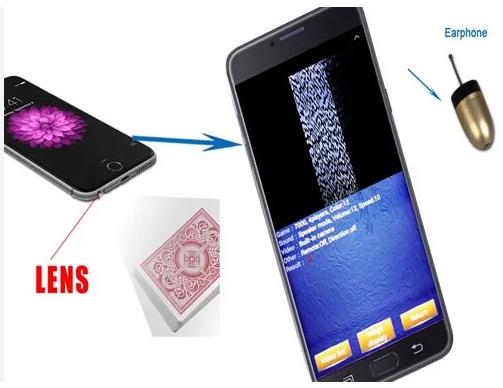
The best marked card shops demonstrate genuine technical knowledge. Signs of a knowledgeable supplier include the ability to explain the differences between luminous ink wavelengths, compatibility guidance for specific lens or analyzer models, and documented quality control procedures. Avoid shops that cannot answer basic questions about their products or that use vague marketing language without technical specifics.
Pricing Transparency
Reliable shops display clear pricing with no hidden fees. Standard price ranges for professional marked cards typically fall between 15 and 80 dollars per deck depending on the marking system and card stock quality. Extremely low prices, especially below 10 dollars per deck, often indicate poor quality cards with markings that fade quickly or substandard card stock that feels noticeably different from regular playing cards.
Bulk pricing should be clearly stated with volume discount tiers. A transparent shop will publish prices for orders of 1-5 decks, 5-20 decks, 20-50 decks, and 50 or more, allowing you to calculate your costs accurately before placing an order.
Red Flags When Shopping for Marked Cards
Watch for these warning signs when evaluating a marked card shop:
- No product specifications: Listings that lack information about card stock, marking type, reading distance, or compatibility should raise immediate concerns about product quality.
- Stock photos only: Shops that use only generic images rather than actual product photos may be dropshippers with no inventory control. Look for shops that show real product photos including close-ups of card backs and markings.
- No return or satisfaction policy: Established suppliers stand behind their products. A shop with no clear return policy or satisfaction guarantee may be selling low-quality goods they do not want to take back.
- Pressure sales tactics: Any shop that pushes for immediate purchase, claims limited stock when it does not exist, or refuses to answer reasonable questions should be avoided entirely.
- Unclear contact information: Professional shops provide clear contact details including email, phone, and physical address. Shops with only a contact form and no other contact methods may be difficult to reach if problems arise.
Questions to Ask Before Buying Marked Cards
Before placing an order, ask the shop these key questions:
- What type of marking system do these cards use? Is it luminous ink, barcode, or another system?
- What wavelength range do the markings respond to? Is the ink IR-reactive, UV-reactive, or multi-spectrum?
- What is the expected marking lifespan in terms of shuffles or hours of use?
- Are the cards compatible with my existing reading equipment? Can the shop confirm compatibility with specific lens or analyzer models?
- What card stock is used? Is it the same weight and finish as standard playing cards?
- What is the shop return or replacement policy if the cards do not meet expectations?
Payment and Shipping Considerations
Payment methods accepted by a shop can indicate its legitimacy. Established shops typically accept multiple payment methods including credit cards and various digital payment options. Shops that accept only wire transfers or cryptocurrency may present higher risk, especially for first-time buyers.
Shipping practices also matter. Quality shops use discreet packaging that protects the cards from damage during transit. Shipping should be trackable, and the shop should communicate tracking information proactively. International shipping times and costs should be clearly stated before checkout.
Building a Long-Term Supplier Relationship
For buyers who need marked cards regularly, building a relationship with a reliable supplier provides several benefits: priority access to new products, volume discount pricing, faster order processing, and more flexible custom order options. Start with a small test order to evaluate product quality and service before committing to larger purchases. A good supplier relationship is built on consistent quality, transparent communication, and mutual trust over multiple transactions.
Conclusion
Choosing the right marked card shop is as important as choosing the right marked cards. By evaluating product range, technical knowledge, pricing transparency, and customer service quality, you can identify reliable suppliers and avoid the common pitfalls that trap inexperienced buyers. Take the time to research shops thoroughly, ask detailed questions, and start with small orders to verify quality before scaling up your purchases.